Workshop on countering proliferation financing
Unofficial translation from the Vietnamese original.
From 22 to 23 January 2025, a workshop on countering proliferation financing was held in Bangkok, Thailand.
The workshop was organised by the United Nations Office on Drugs and Crime (UNODC) and attended by 28 delegates and experts from Vietnam, Laos, Cambodia, Thailand, Malaysia, the Philippines, Indonesia and UNODC. It aimed to assess proliferation financing threats and vulnerabilities in countering proliferation financing in South-East Asia and to make recommendations to help countries in the region mitigate these threats and address these vulnerabilities, thereby enhancing the effectiveness of efforts to counter proliferation financing in each country and in the region.
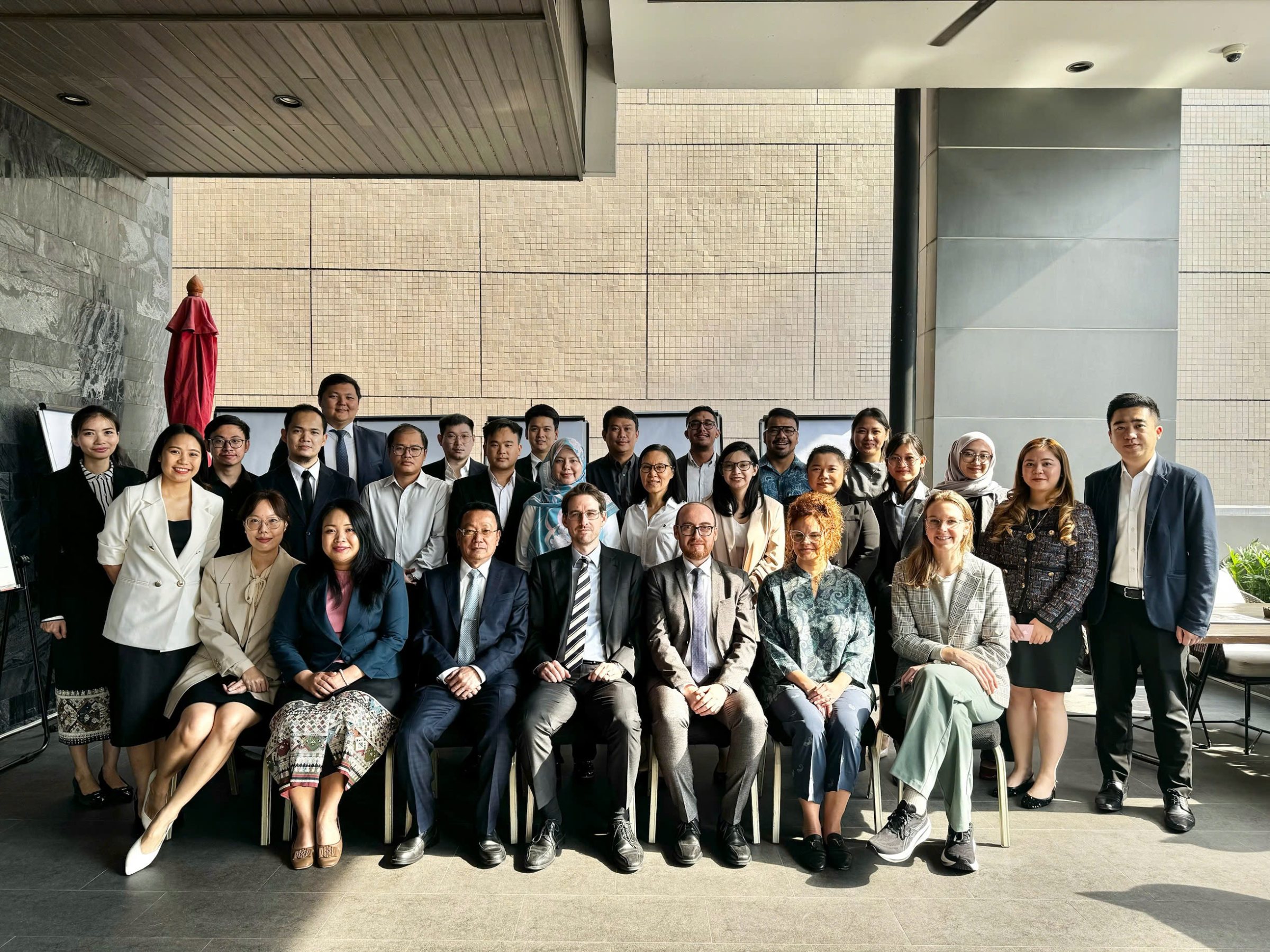
Participants in the workshop pose for a group photo.
The main proliferation financing threats to countries in South-East Asia were identified as: (1) misuse of crypto-to-fiat off-ramp services; (2) trading companies and e-commerce websites; (3) exploitation of the maritime sector; (4) use of casinos for money laundering; (5) exploitation of digital payment services; (6) use of overseas workers in the restaurant and information technology sectors; (7) exploitation of diplomats as communication channels; (8) risks arising from traditional financial services.
The main vulnerabilities in countering proliferation financing are: (1) limited capacity to identify proliferation financing typologies, map controls and assess risks; (2) limited inter-agency cooperation at the operational and policy levels; (3) a lack of legislation (or weak enforcement of legislation) for the virtual asset sector; (4) limited transparency of beneficial ownership.
On the basis of these threats and vulnerabilities, UNODC experts made 8 recommendations for countries in South-East Asia: (1) build capacity to identify proliferation financing typologies, map controls and assess risks; (2) strengthen inter-agency cooperation on policy and enforcement; (3) ensure that financial institutions take into account specific financial crime indicators relating to virtual assets (VAs) and virtual asset service providers (VASPs) in their institutional risk assessments; (4) enhance the transparency of beneficial ownership; (5) strengthen measures under Recommendation 15 of the Financial Action Task Force (FATF); (6) assess the scale of overseas information technology workers' activities in the region; (7) establish a multidisciplinary research group to identify and assess collaborative efforts between organised crime and proliferation financing; (8) develop regional red flag reports and proliferation financing typology reports.
At the workshop, delegates and experts also analysed the strengths, weaknesses, opportunities and threats in countering proliferation financing in South-East Asian countries, and presented and analysed for delegates key elements in conducting risk assessments of the virtual asset sector and proliferation financing risk assessments.
The Vietnamese delegation participated actively and proactively in the workshop. Through it, our officers gained much useful knowledge and had the opportunity to exchange experience with international and regional experts on countering proliferation financing, thereby enhancing their professional capacity. Participation in the workshop also helped to enhance Vietnam's image and role in countering the proliferation of weapons of mass destruction.
Nguyen Van Vuong – Centre 81