Workshop on Communication Management in Radiological Emergency Response
Unofficial translation from the Vietnamese original.
From 12 to 14 December 2023, the U.S. Department of State and the Ministry of Foreign Affairs of the Republic of Korea co-hosted the Workshop on Communication Management in Radiological Emergency Response, "Operation PABAL", in Seoul, the Republic of Korea. The workshop was attended by 90 delegates, experts in the fields of radiation, communication and crisis management, from 15 countries and international organisations, namely Cambodia, Canada, India, Indonesia, Laos, Malaysia, Mongolia, Pakistan, the Philippines, Thailand, the United Kingdom, the Republic of Korea, the United States, Vietnam and the International Atomic Energy Agency (IAEA). The purpose of the workshop was to develop and test communication strategies and coordination mechanisms between response forces, relevant agencies and the public before, during and after a terrorist incident involving a radiological dispersal device.
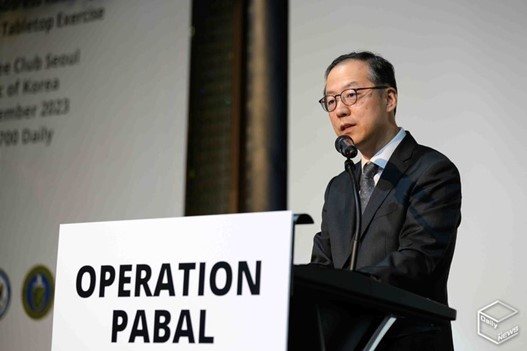
Mr Kwon Ki Hwan - Deputy Minister of Foreign Affairs of the Republic of Korea, delivers opening remarks at the workshop
In his opening remarks, Mr Kwon Ki Hwan, Deputy Minister of Foreign Affairs of the Republic of Korea, presented the Republic of Korea's efforts to strengthen national nuclear security and stressed the need for cooperation and information sharing among countries to respond to international nuclear and radiological terrorism in the new context and to respond promptly to disinformation generated by new technologies such as artificial intelligence (AI).
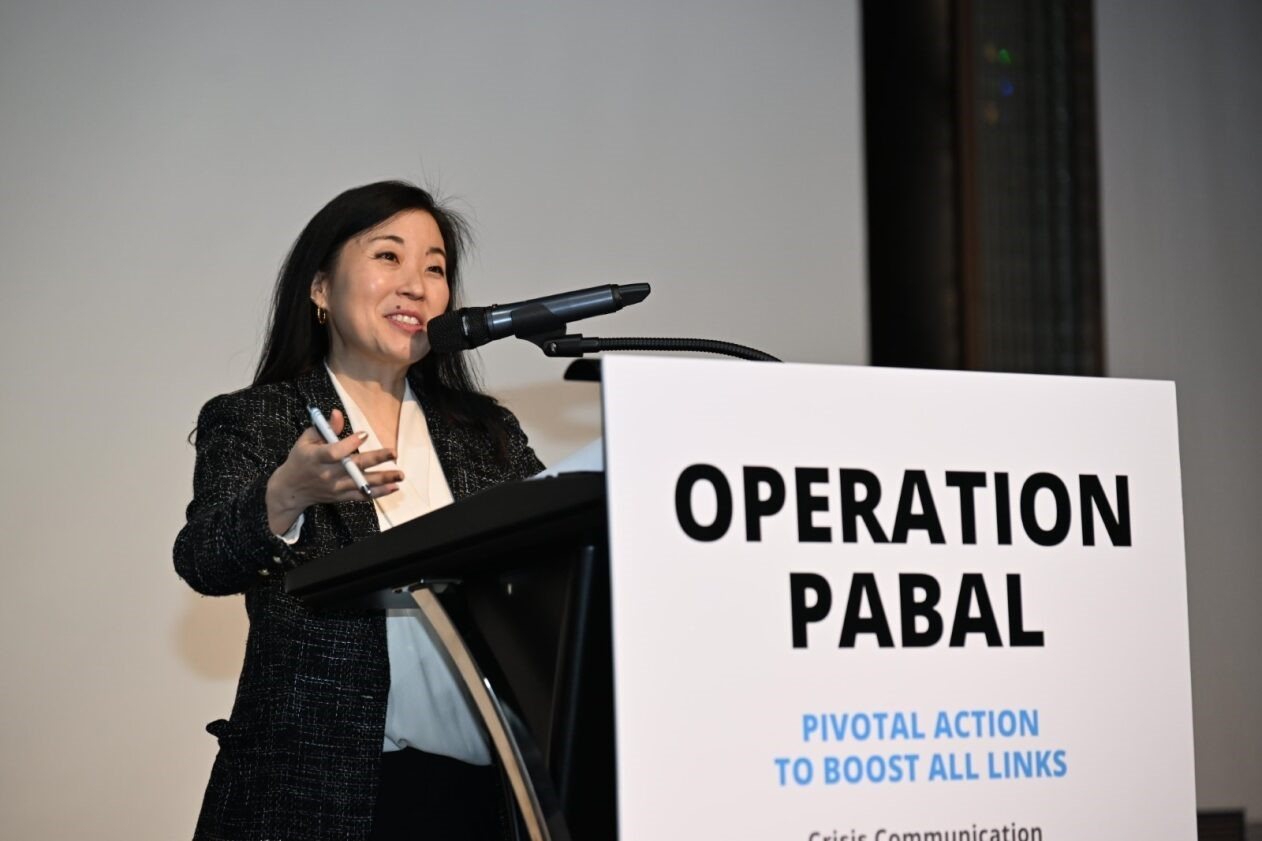
Ms Joy Sakurai - Deputy Chief of Mission of the United States in the Republic of Korea, delivers opening remarks at the workshop
Also opening the workshop, Ms Joy Sakurai, Deputy Chief of Mission of the United States in the Republic of Korea, outlined non-traditional security challenges in the new context, including the risk of terrorism using improvised radiological dispersal devices (dirty bombs). Ms Sakurai also emphasised international cooperation, information sharing among countries and the preparation of public communication campaigns to be ready to respond to transnational radiological terrorism. Workshop delegates also discussed the importance of technical cooperation and information sharing among countries in countering non-traditional security challenges related to weapons of mass destruction and chemical, biological, radiological and nuclear (CBRN) agents.
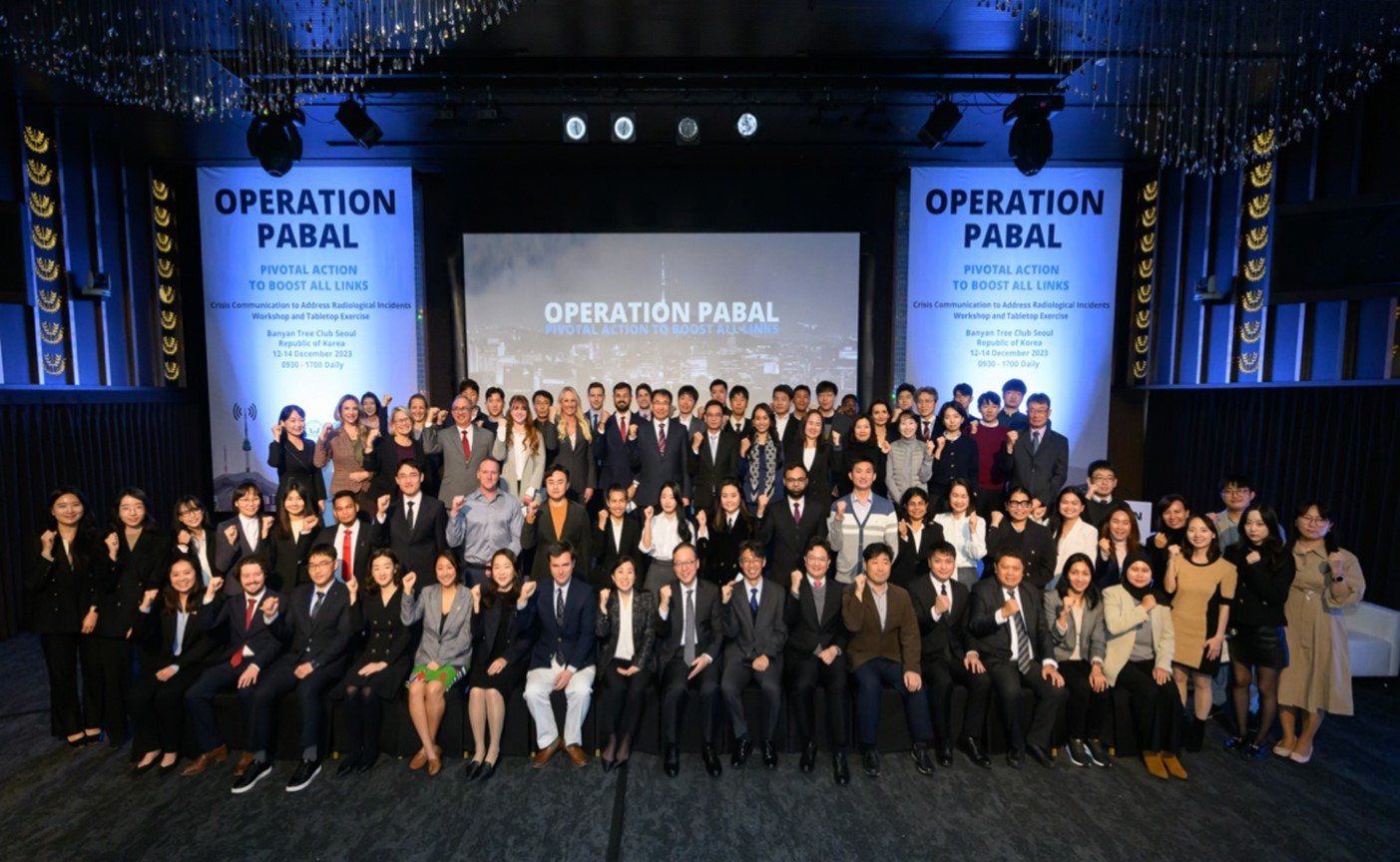
Workshop delegates in a commemorative photograph
Over the three days of the workshop, delegates discussed the aspects to be considered in preparing for, responding to and recovering from a terrorist incident involving an improvised radiological dispersal device (dirty bomb). In addition to radiological technical matters and response procedures, the workshop focused mainly on issues related to public communication, so that people understand the nature and severity of the situation, reject false and harmful information, and trust the authorities and the response forces.
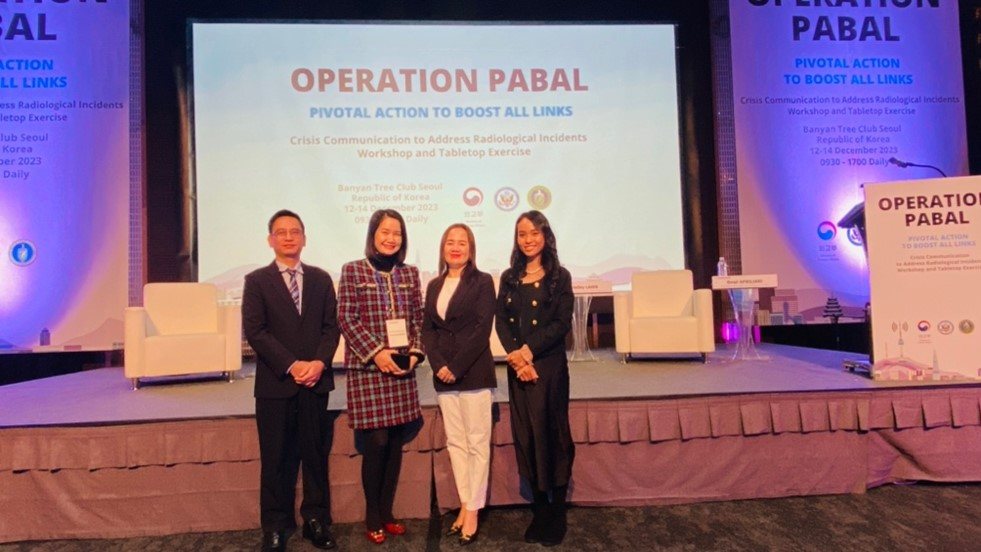
Delegates from Vietnam and Cambodia in a commemorative photograph
At the workshop, the organisers arranged exercises and discussions built around a scenario in which terrorists transport radioactive material across a border, use an unmanned aerial vehicle (UAV) carrying an explosive device containing radioactive material (also known as a radiological weapon or dirty bomb) and carry out a terrorist attack on a crowded market area. Delegates discussed in groups how to assess the situation, carry out the steps of the response and propose a public communication campaign, classify related information appearing on social media, in the press, on television, etc., and combat and refute false and harmful information.
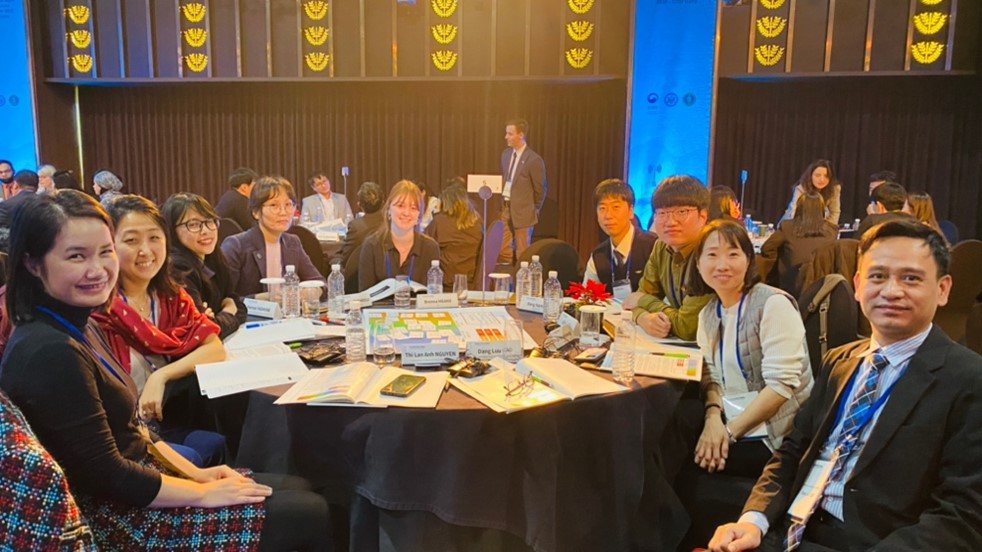
Workshop delegates working in groups
The workshop also heard presentations from guest speakers from the International Atomic Energy Agency (IAEA), the United States, Canada, the United Kingdom, Thailand and the Republic of Korea on inter-agency and multinational coordination procedures for managing communication crises related to radiological incidents.
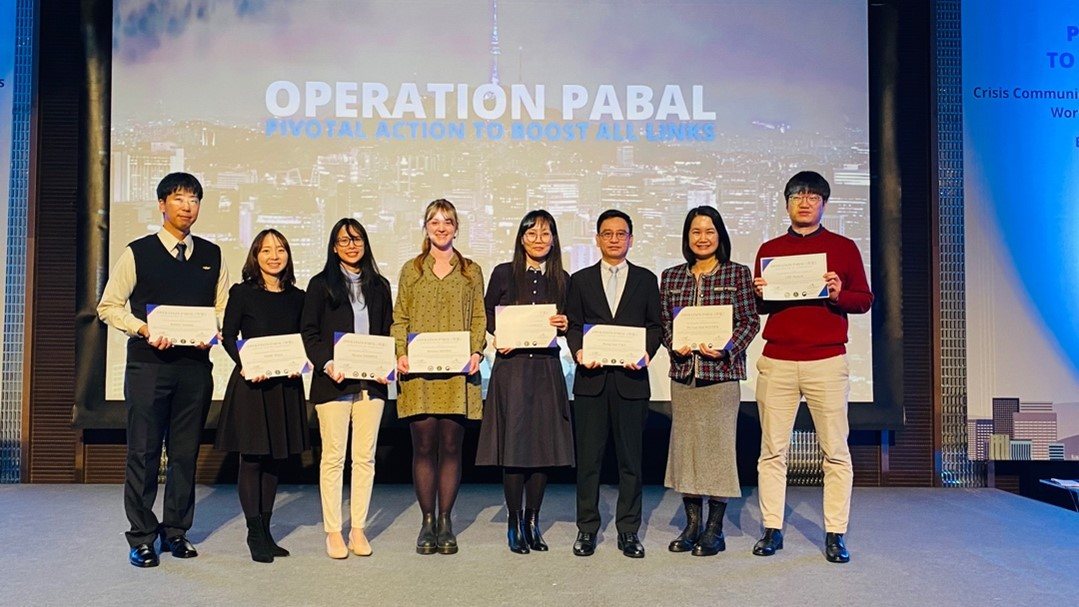
Delegates receive certificates of attendance at the workshop
At the close of the workshop, delegates agreed that the content and the discussion exercises were highly necessary, given that most countries have so far focused only on the technical issues and organisation of incident response, and have not yet developed in-depth expertise in each area of incident response work, especially public communication. Doing this work well will prevent public confusion, help refute and sort out false and malicious information, help quickly stabilise the security, political, public order and social situation, and speed up the response to and recovery from radiological incidents.
Cao Dang Luu - Centre 81