Vietnam Calls on States to Take Responsibility for Controlling Illicit Weapons
Unofficial translation from the Vietnamese original.
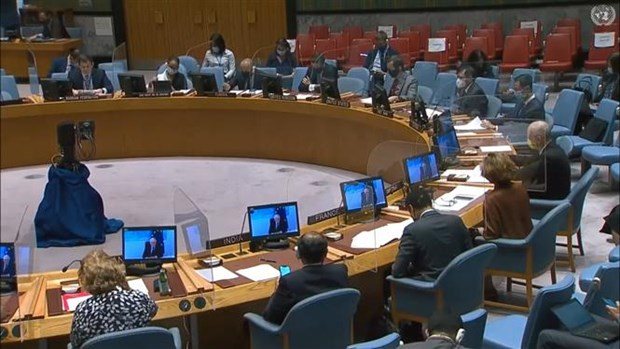
On 22 November, the United Nations Security Council (UNSC) held a debate on the impact of illicit weapons on peace and security, attended by 54 United Nations Member States.
Mr Robin Geiss, Director of the United Nations Institute for Disarmament Research (UNIDIR), and Ms Maria Pia Devoto, representing the Arms Control Forum, briefed the meeting. Participating in the event, Vietnam emphasised that states bear the primary responsibility for ensuring the management and control of weapons and for combating crime and illicit weapons.
Speakers stressed that the prolonged use of illicit weapons has aggravated armed conflicts, causing many civilian casualties, especially among women and children, and affecting security, stability and socio-economic development in conflict and post-conflict areas. The UNSC has discussed and adopted many resolutions with measures to address this issue, including resolutions 2117 (2013) and 2220 (2015).
Many speakers stressed the need to address this issue at the national, regional and international levels and to implement existing instruments in a harmonised manner, including the 2001 United Nations General Assembly Programme of Action (PoA) on small arms and light weapons, the International Tracing Instrument (ITI) and regional initiatives such as the Silencing the Guns in Africa initiative, the Roadmap for a sustainable solution to the illegal possession, misuse and trafficking of small arms and light weapons and their ammunition in the Western Balkans, and the Caribbean Firearms Roadmap for implementing priority actions on the illicit proliferation of firearms and ammunition in a sustainable manner by 2030. Many speakers called on the UNSC to continue proactively mainstreaming this issue into its work on conflict prevention, peacekeeping, arms embargoes on conflict areas, post-conflict reconstruction, counter-terrorism and combating transnational crime. United Nations peacekeeping missions should continue to assist host countries in weapons collection, disarmament, demobilisation and reintegration of combatants, security sector reform and post-conflict reconstruction.
Speaking at the meeting, Ambassador Dang Dinh Quy, Permanent Representative of Vietnam to the United Nations, shared a number of views and stressed that states must respect and comply with international law and the Charter of the United Nations, including humanitarian law, international treaties and relevant UNSC resolutions; take into account the specific circumstances of individual regions and countries and support capacity-building to address post-conflict security and public order issues; and adopt a comprehensive and effective approach. Ambassador Dang Dinh Quy stated that the legitimate right of states to acquire, manufacture, transfer and possess weapons for national defence and security purposes must be ensured.