FATF, INTERPOL and UNODC Call for Urgent Action to Stop Money Laundering and Other Illicit Activities
Unofficial translation from the Vietnamese original.
The International Criminal Police Organization (INTERPOL), the United Nations Office on Drugs and Crime (UNODC) and the Financial Action Task Force (FATF) have warned of the dangers that organised crime poses to the integrity of the global financial system and called on countries to step up anti-money laundering (AML) measures to combat transnational crime.
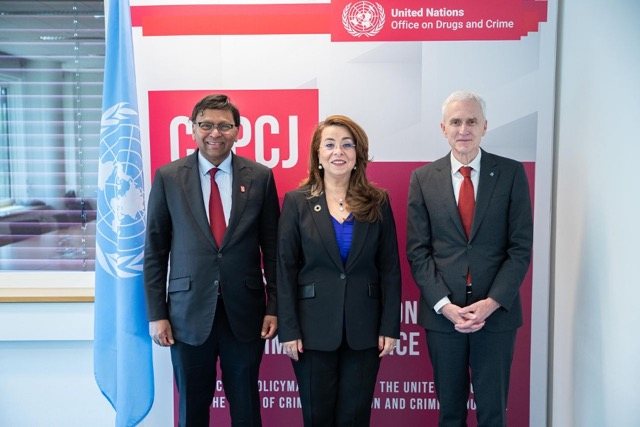
At an event during the 33rd session of the United Nations Commission on Crime Prevention and Criminal Justice (held in Vienna, Austria), the leaders of the three global bodies issued a call: “Countries must urgently step up efforts to target the vast illicit profits generated by transnational organised crime, which fuel conflict, finance terrorism and harm vulnerable populations.” This is an unprecedented call to action from the heads of the FATF, INTERPOL and UNODC.
By focusing on the proceeds of crime and the illicit financial networks behind them, Member States can counter and disrupt organised crime networks more effectively and enhance the effectiveness of crime prevention efforts. Disrupting criminal activity by targeting illicit profits also has a positive impact on the goals of the 2030 Agenda for Sustainable Development, such as inclusive economic growth, financial stability, stronger institutions and better governance.
FATF President T. Raja Kumar said: “Global financial integrity is crucial for financial stability, inclusion, and peace and
security. This can only be achieved through the robust and effective implementation of standards on combating money laundering and terrorist financing. The FATF is committed to playing its part and stepping up its mission in cross-cutting efforts to help stop all types of serious crime, especially the laundering of criminal proceeds. We must seize the initiative and work together on asset recovery to cut off the lifeblood of criminals – their money and assets. This must be a key preventive strategy that all governments adopt.”
INTERPOL Secretary General Jürgen Stock said: “Criminals will traffic any commodity to generate profit, and every measure must be taken to deprive them of these illicit gains. Stopping illicit flows is essential to promoting the rule of law and protecting vulnerable populations. Action now, across all sectors and at the global level, is essential, and INTERPOL stands ready to provide all necessary support.”
UNODC Executive Director Ghada Waly said: “Money laundering, terrorist financing and their predicate crimes are causing instability, violence and exploitation around the world. Protecting financial integrity is crucial to advancing peace and security, promoting sustainable development and protecting vulnerable populations. UNODC stands ready to work with governments, the private sector and our partners at the FATF and INTERPOL to strengthen financial and criminal investigations to dismantle the illicit financial networks that support terrorism and transnational organised crime.”
The three leaders of the FATF, INTERPOL and UNODC highlighted recent improvements to the FATF international standards on combating money laundering and terrorist financing and called for accelerated policy reform and capacity-building ahead of the 2026 United Nations Crime Congress (to be hosted by the United Arab Emirates). They affirmed that financial integrity is a key pillar of stability and that, above all, greater support is needed for countries facing difficulties in effectively implementing frameworks for combating money laundering and terrorist financing. They also noted the positive impact of Member States strengthening cooperation with the private sector and civil society to implement unified approaches to combating financial crime. The three leaders considered that operating through public-private partnerships and task forces would accelerate and improve the effectiveness of global enforcement efforts.
High-level participants at the event “Making Crime Not Pay: Accelerating the Effective Implementation of Anti-Money Laundering and Counter-Terrorist Financing Globally” discussed capacity-building, the effective implementation of the risk-based approach, multi-sectoral partnerships and technology as key drivers for improving effectiveness in the global fight against financial crime.
UNODC, the FATF and INTERPOL will continue this call to action – urging Member States to improve their AML/CFT frameworks – through to the 2026 Crime Congress.
Nguyen Van Vuong – Centre 81