Enhancing the Operational Capacity of Standing Office 81 to Meet the Requirements of Defending the Homeland
Unofficial translation from the Vietnamese original.
After more than two years of implementing the Government's Decree No. 81/2019/ND-CP on countering the proliferation of weapons of mass destruction, the Standing Office of the National Focal Point of Vietnam (Standing Office 81) has successfully fulfilled its task of advising the Ministry of National Defence and the Head of the National Focal Point of Vietnam on state management, capacity building and the improvement of the legal system for countering the proliferation of weapons of mass destruction, among other matters. However, these are only initial results. To meet the requirements of defending the Homeland in the new situation, comprehensive measures are needed to enhance the operational and response capacity of Standing Office 81 and the dedicated forces.
As a responsible member of the international community, Vietnam has always complied with international treaties and multilateral mechanisms, including those on countering the proliferation of weapons of mass destruction. Notably, in implementation of United Nations Security Council Resolution 1540 and the international treaties and multilateral mechanisms on countering the proliferation of weapons of mass destruction to which Vietnam is a party, on 11 November 2019 the Government issued Decree No. 81/2019/ND-CP on countering the proliferation of weapons of mass destruction. This is the first comprehensive and important legal basis in this field, aimed at proactively preventing, stopping and dealing with acts of proliferation and proliferation financing of weapons of mass destruction, and at combining the countering of the proliferation of weapons of mass destruction with socio-economic development and the safeguarding of national defence and security. As the Standing Office of the National Focal Point of Vietnam for countering the proliferation of weapons of mass destruction (Standing Office 81), the Chemical Corps has actively and proactively advised and assisted the Minister of National Defence and the Head of the National Focal Point in drafting and issuing guidance documents, implementing Decree No. 81/2019/ND-CP and performing the state management function of the Ministry of National Defence in countering the proliferation of weapons of mass destruction. At the same time, it has actively consolidated and strengthened the organisation, staffing, functions, tasks, powers and working relationships of the forces responsible for countering the proliferation of weapons of mass destruction, and has effectively carried out international cooperation activities with the Export Control and Related Border Security (EXBS) Program of the U.S. Department of State to build the capacity of the National Focal Point of Vietnam and the focal units of Party commissions, ministries, sectors and localities. It has also advised the Government and the Ministry of National Defence on the prevention of and response to chemical, biological, radiological and nuclear risks and incidents, such as the issue of floating nuclear power plants (FNPP), measures to deal with imports of monazite ore containing radioactive substances, the radioactive isotope of iodine detected in the East Sea area, and the Havana syndrome. In this way, it has helped to enhance Vietnam's international standing and prestige, to make use of technical, technological, economic and trade cooperation, and to prevent hostile forces from exploiting these issues to sabotage and weaken the country's defence and security capabilities.
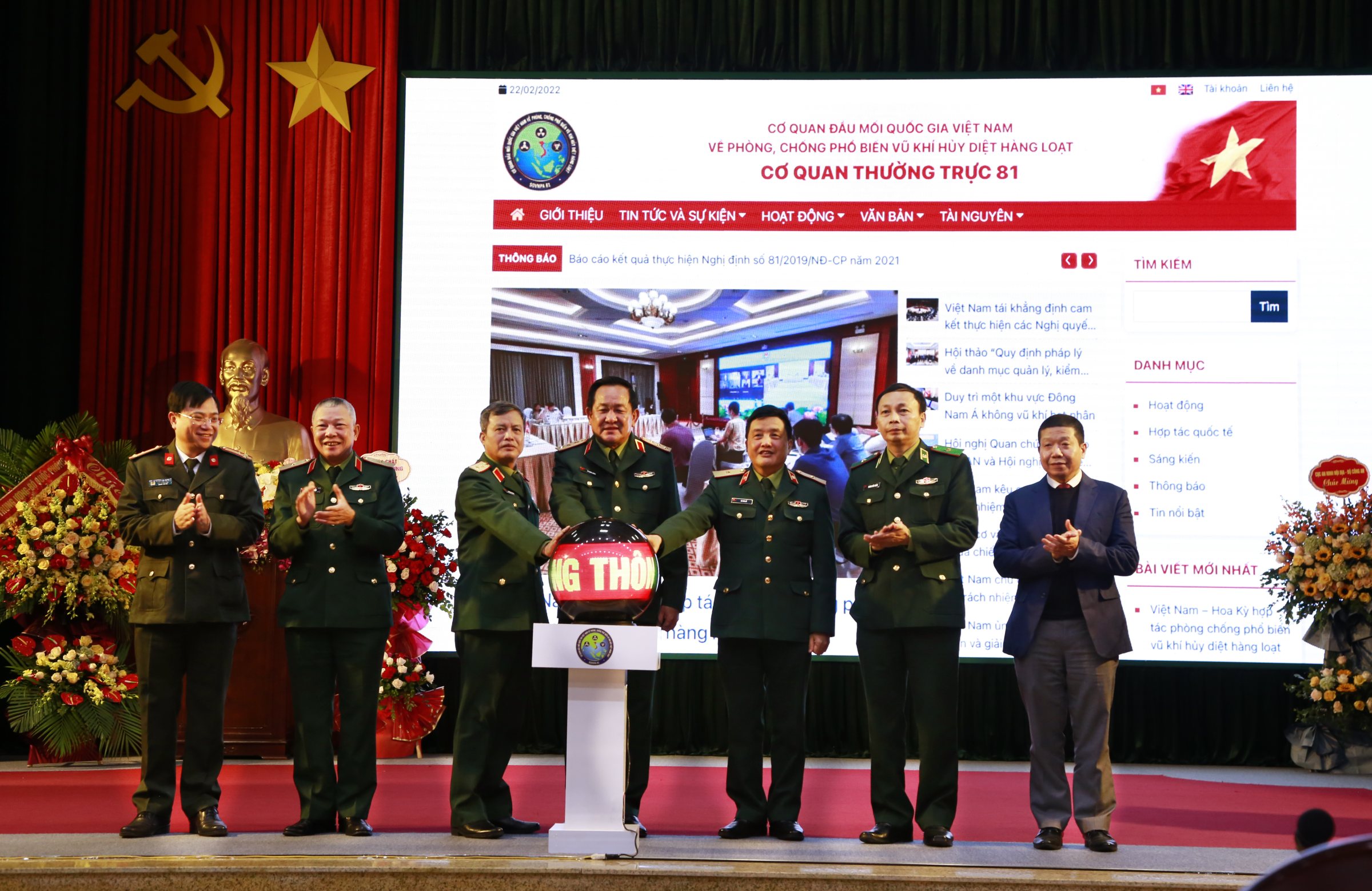
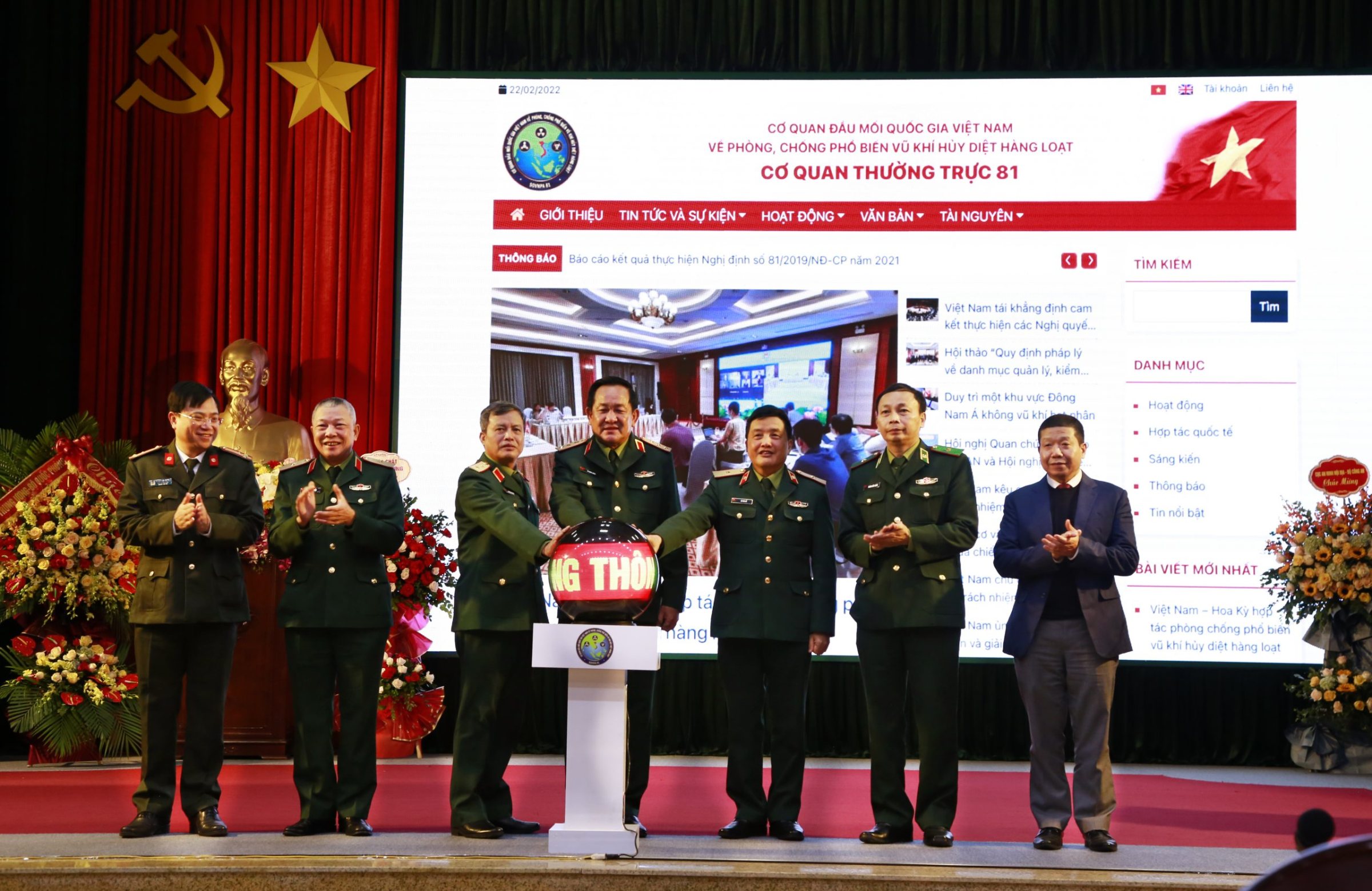
Launch ceremony of the Standing Office 81 web portal
In the coming years, peace, cooperation and development will remain the prevailing trend, but the world and regional security and political situation is evolving rapidly and in complex ways, with many uncertain and unpredictable factors. In particular, taking advantage of the achievements of the Fourth Industrial Revolution, some major powers, in disregard of international law, continue to step up research into and the modernisation of their nuclear arsenals towards greater accuracy and range but lower yield, as well as the research and development of new generations of chemical weapons. Meanwhile, international terrorist organisations continue to seek every means to acquire and use weapons of mass destruction; the trade in, transport and production of toxic chemicals, radioactive sources and biosafety concerns carry the potential risk of toxic chemical, radiological and biological incidents, threatening the security and safety of nations, including Vietnam.
In this context, countering the proliferation of weapons of mass destruction is an urgent requirement that calls for the mobilisation of all forces and resources, close coordination among ministries, sectors and localities, and the involvement of the entire political system. In its role as the Standing Office (Standing Office 81), the Chemical Corps will continue to thoroughly grasp and focus on effectively implementing the following main tasks and measures:
First, to study and accurately forecast the situation of the proliferation and proliferation financing of weapons of mass destruction, and to advise and propose to the Ministry of National Defence, as the National Focal Point, comprehensive and timely response and handling measures. In line with its functions and tasks, in the coming period the Corps will continue to coordinate closely with the agencies and units responsible for collecting information both within and outside the Army, and to propose the exchange and sharing of relevant information, especially on the current state of and trends in the research and development of weapons of mass destruction, and on the strategies, plans, organisation, staffing, forces, means and counter-proliferation activities of other countries. It will coordinate closely with relevant ministries and sectors to keep abreast of the state management of chemical, biological, radiological and nuclear agents and the control of materials related to weapons of mass destruction and dual-use goods, while proactively and actively participating in international cooperation mechanisms to receive and share information and experience on countering the proliferation of weapons of mass destruction. On that basis, it will advise and propose to the Ministry of National Defence, as the National Focal Point of Vietnam, measures to enhance the effectiveness of state management of countering weapons of mass destruction and to perform its tasks in accordance with the law. It will focus on proposing ways to make communication and awareness-raising activities more effective, so that troops and the public better understand the importance of countering weapons of mass destruction for building and defending the Homeland in the new situation. It will progressively improve the legal basis and coordination mechanisms, organise activities and enhance capacity to counter the proliferation of weapons of mass destruction, so as never to be caught passive or by surprise.
Second, to review and propose additions to and the improvement of a consistent system of legal normative documents on countering the proliferation of weapons of mass destruction that safeguards national interests and is consistent with international law. The Corps will coordinate closely with the competent agencies of the Ministry of National Defence, military units and Party commissions, ministries, sectors and localities to review legal normative documents, identify inadequate provisions or areas and matters not yet regulated, and propose the issuance, amendment and supplementation of legal normative documents to implement the treaties and multilateral mechanisms on countering the proliferation of weapons of mass destruction. Particular attention will be given to improving the provisions on sanctions and the implementing regulations, such as the list of materials related to weapons of mass destruction and the definition of criminal offences in this field; developing circulars and guidance on countering the proliferation of weapons of mass destruction; and working with the focal units to conduct preliminary and final reviews of the implementation of tasks and to advise on and propose the development of a law on countering the proliferation of weapons of mass destruction.
Third, to enhance the effectiveness of coordination with ministries, sectors and localities and of international cooperation, harnessing combined strength in performing this important task. Countering the proliferation of weapons of mass destruction is a difficult and complex task that affects all areas of social life. It therefore requires close coordination among all levels, sectors, forces and localities to achieve unity in awareness and action. Accordingly, Standing Office 81 will step up information exchange and professional coordination with the dedicated bodies of ministries, sectors and localities, and will develop mechanisms for and organise information exchange between the National Focal Point, Standing Office 81 and the focal units. It will expand international cooperation through diversified content, forms, partners and scope, in line with the views and guidelines of the Party, the Central Military Commission and the Ministry of National Defence on military and defence foreign relations and international cooperation. It will make effective use of the cooperation mechanisms with the International Atomic Energy Agency (IAEA), the Organisation for the Prohibition of Chemical Weapons (OPCW), the Export Control and Related Border Security (EXBS) Program and the Centres of Excellence Initiative in the chemical, biological, radiological and nuclear field (CoE), as well as regional and international defence policy dialogue mechanisms, in order to share information, exchange experience, train personnel, mobilise resources and receive transfers of technology and techniques for countering the proliferation of weapons of mass destruction. Priority will be given to exchanging and sharing experience in drafting legal normative documents and in raising awareness and capacity to detect, verify and respond to proliferation scenarios involving weapons of mass destruction, thereby creating a favourable environment for national development without harming national defence and security, and preventing hostile forces from exploiting these issues as a pretext for sabotage. At the same time, this will enhance Vietnam's international standing and contribute to preventing war and defending the Homeland early and from afar.
Fourth, to enhance the capacity and operational capability of the National Focal Point and Standing Office 81, and the response and handling capability of the forces responsible for countering the proliferation of weapons of mass destruction. In the immediate term, the focus will be on consolidating the National Focal Point of Vietnam in line with the practical implementation of counter-proliferation efforts and the recommendations of international organisations; progressively building a pool of experts in the Ministry of National Defence and Standing Office 81; and providing professional training for the officers of Centre 81, the focal units and the dedicated forces responding to proliferation scenarios involving weapons of mass destruction. The aim is that by 2024 the full-time officers of Standing Office 81 will have a high level of professional expertise and foreign language proficiency at level 4 or above, enabling them to work in an international environment, and that 100% of the standing bodies of the focal units and 100% of the response forces will be capable of providing advice on and handling proliferation scenarios involving weapons of mass destruction. To strengthen equipment capabilities, high-sensitivity chemical, biological, radiological and nuclear reconnaissance, detection and analysis equipment should be studied and added to the Corps' existing equipment procurement projects and tasks. The Corps will also advise and propose that the Ministry approve and implement a project to enhance the capacity of land and maritime border control forces and of ministries, sectors and localities to recognise, detect and handle proliferation scenarios, ensuring the ability to detect, verify and respond to proliferation scenarios involving weapons of mass destruction, so that all forces are fully equipped to recognise, detect, identify and respond to such scenarios and meet the requirements of defending the Homeland in the new situation.
Major General HA VAN CU, Commander of the Chemical Corps, Standing Deputy Head of the National Focal Point of Vietnam for countering weapons of mass destruction